
Caswell Developmental Center – Parrott, Byrum, and Kendall Roof Replacements
North Carolina Department of Health and Human Services | Kinston, NC
PROJECT DETAILS
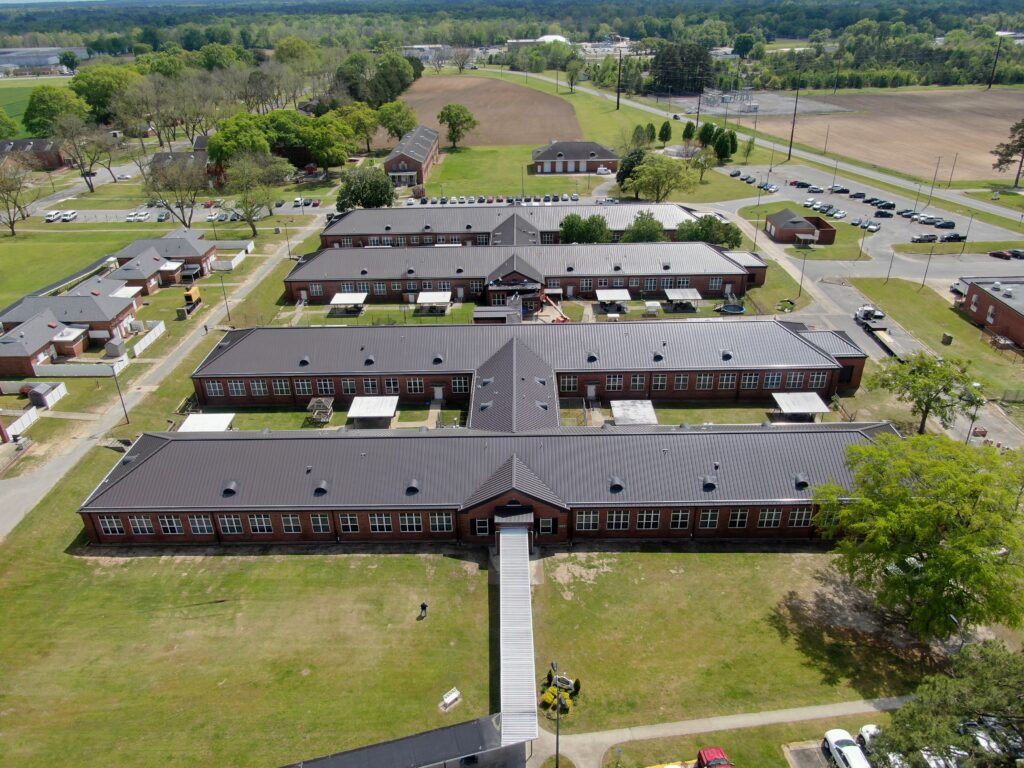
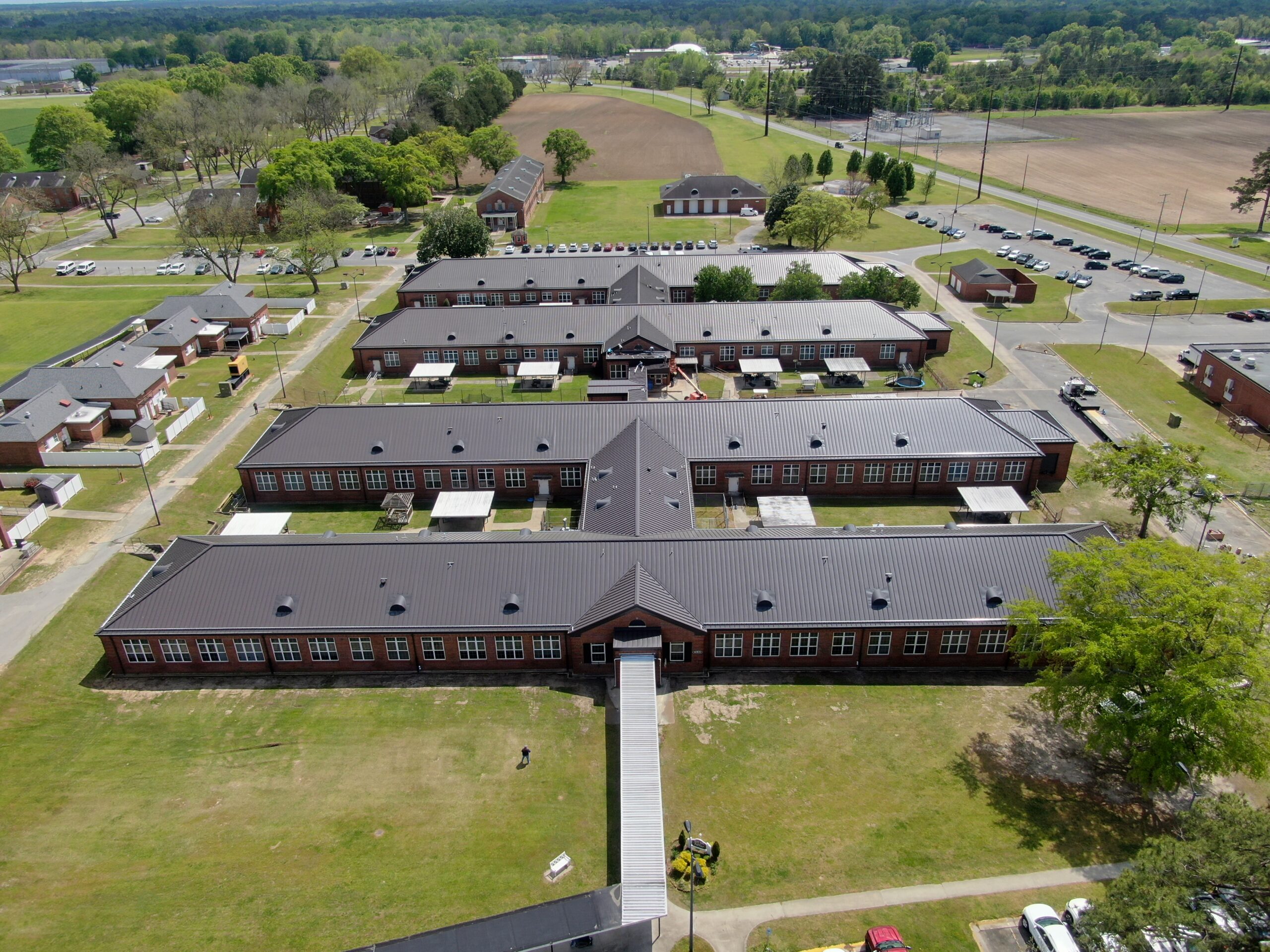
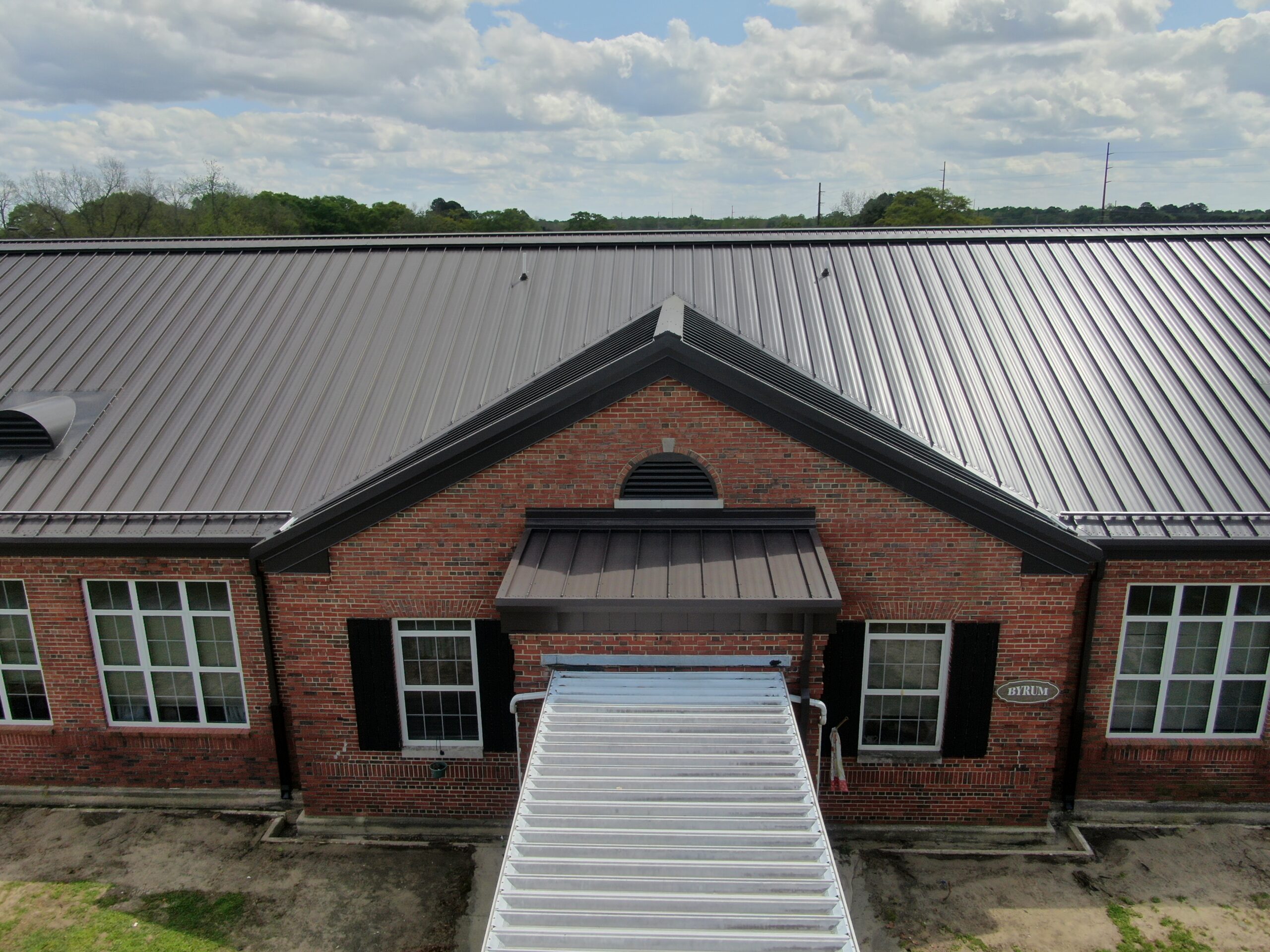
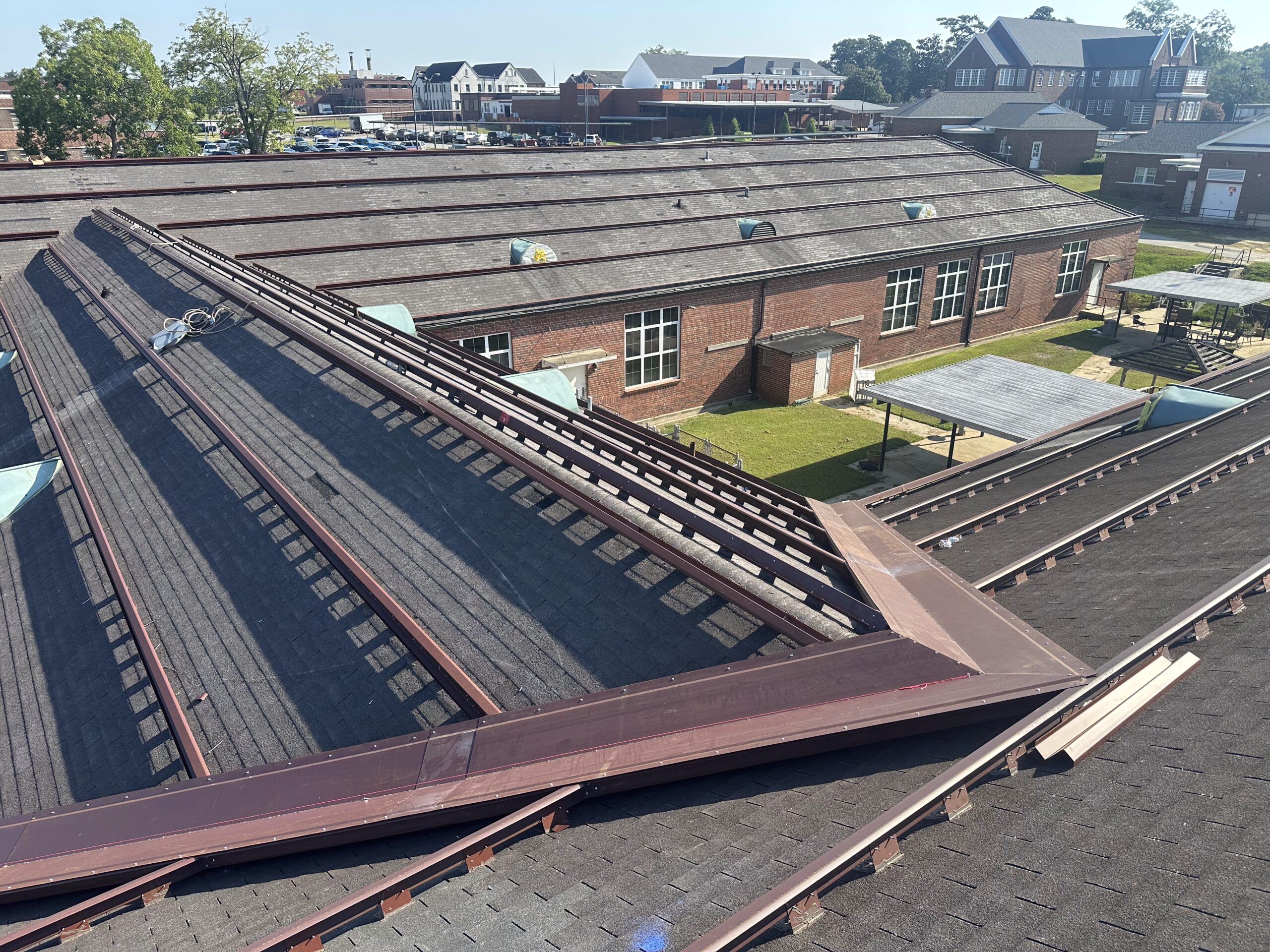
The existing shingled roof system was left in place and was covered with a new retrofit standing seam metal roof system. Retrofit metal framing was secured through the existing shingles and roof deck to the existing steel framing to support the new standing seam metal roof system and flashings independent of the aging nailable concrete deck. Additional securement of the existing nailable concrete roof planks was provided in locations where the construction of the building resulted in deck planks with cut ends. These areas were generally located at valleys and clips within identified areas were spaced @ 16” o.c. (one per plank) through the deck and into the steel structure beneath to pin the plank and prevent downslope movement. Existing gutters and downspouts were removed and replaced with new components as a part of the overall system assembly. Existing metal dormers were removed and replaced with new custom fabricated dormer and louver assemblies powder-coated to match the color of the new roof panels.
At the existing roof areas with EPDM membrane roof systems, the existing roof systems were left in place and a retrofit standing seam metal roof system including roof panels, trim, and retrofit framing to provide a 1:12 slope, was installed above.
Testing for asbestos-containing materials during the design phase identified asbestos in isolated joint grout near the ridgeline of the nailable concrete planks. The project scope included close adherence to a protection and monitoring plan within the attic space developed by a Certified Asbestos Designer, Mr. Oral McGirt with OLM Environmental. A regulated work area was created within the attic space to protect the attic and contents from any disturbed debris created during the roofing process. Negative air equipment and critical barriers were utilized to remove any potentially contaminated air and monitoring within the building and regulated work areas was performed at junctures identified by the plan. Following completion of work, protection materials were removed and air monitoring performed to clear the attic space for regular use.